Health and Safety Policy for Commercial Waste Mitcham Operations
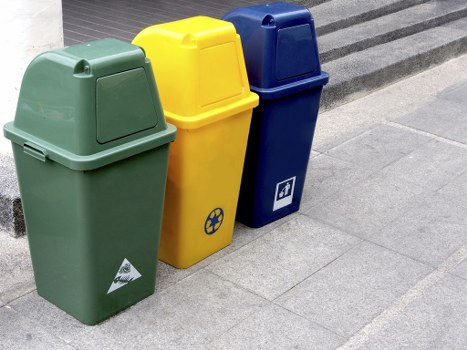 Purpose: This Health and Safety policy sets out the standards and procedures for handling commercial waste across our service area. It applies to all staff, contractors and third-party operatives involved in commercial rubbish services in Mitcham and surrounding business districts. The policy aims to protect workers, visitors and the public by minimising risks from waste collection, transfer, storage and disposal activities. Our approach is based on a risk-based system of work, continual improvement and compliance with applicable health and safety law relevant to commercial waste collection and business waste management.
Scope and Commitment
Our organisation is committed to providing a safe environment during every stage of commercial waste removal. This includes regular collections from retail, office and industrial premises, temporary skip placements, and on-site waste segregation services. We will maintain suitable safe systems of work, provide appropriate equipment and ensure all employees receive training to carry out their duties safely. Safety is integral to service delivery and will be treated as a measurable performance objective at all management levels.
Responsibilities
Responsibilities are clearly defined to ensure accountability. Senior management will provide leadership, resources and oversight. Supervisors will implement procedures and monitor compliance. Employees and contractors must follow instructions, use provided personal protective equipment and report hazards or incidents promptly. Key responsibilities include:- Risk assessment: identify and control hazards before work starts.
- Safe systems: follow documented procedures for handling hazardous and non-hazardous commercial refuse.
- Training: attend mandatory training sessions and toolbox talks.
- Reporting: report near misses, injuries and unsafe conditions without delay.
 Risk Management and Safe Work Practices Risk assessments will be completed for routine and non-routine tasks, including manual handling during commercial rubbish pick-ups, operation of compactors and loading of transfer vehicles. Controls will follow the hierarchy of hazard control: elimination, substitution, engineering controls, administrative actions and personal protective equipment (PPE). Manual handling techniques are taught and enforced to reduce musculoskeletal injury. Chemical and sharps handling are controlled via segregation, secure containment and clear labelling.
Vehicles and mechanical aids used in business waste collection undergo scheduled maintenance and safety checks. Drivers and loaders must carry out pre-start vehicle inspections and will only operate equipment after completing certified training. Where mechanical lifting or tail-lift operations are required, permit-to-work or safe operating procedures will be used to manage risks. Traffic management at collection points is controlled by signage, cones and clear instructions to clients where required.
Personal Protective Equipment and Hygiene
Appropriate PPE, including gloves, high-visibility clothing, safety boots and eye protection, will be provided and used where risk assessments indicate. Staff must maintain personal hygiene protocols: hand washing facilities, sanitiser availability and safe changing arrangements for contaminated clothing. The waste handling policy emphasises preventing cross-contamination and the safe disposal of contaminated PPE.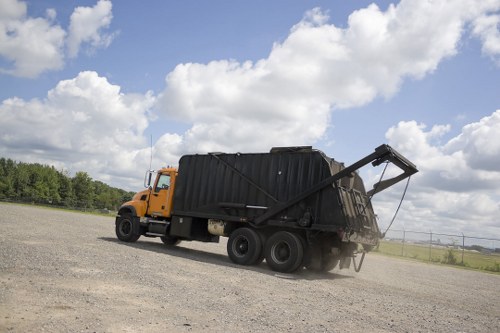
Contractors, Subcontracting and Third-Party Works
All contractors engaged for commercial waste disposal and associated services must demonstrate competency, insurance and evidence of effective health and safety management. Subcontractors are required to comply with our standards and will be monitored through audits, site inspections and performance reviews. Work involving specialist waste types (for example, controlled substances or asbestos-containing materials) must only be undertaken by authorised, licensed professionals under tightly controlled procedures.Emergency procedures are in place to respond to incidents such as spills, fires, accidental exposures or vehicle collisions. These include communication protocols, first aid arrangements, spill response kits and the availability of emergency contact lists for emergency services. Incident investigation will identify root causes and lead to corrective actions to prevent recurrence. Records of incidents, training, inspections and maintenance will be retained for monitoring and continuous improvement.
 Monitoring, Review and Continuous Improvement The effectiveness of this health and safety policy is checked through routine audits, workplace inspections and performance monitoring. Key performance indicators include incident rates, near-miss reports, completion of training and compliance with vehicle and equipment maintenance schedules. This policy will be reviewed annually or following significant changes to operations, legislation or following a major incident. Staff involvement and consultation are central to improvement; regular safety meetings and feedback channels are maintained to ensure workplace concerns are heard and acted upon.
Conclusion: Our commitment to health and safety underpins all commercial waste operations. By setting clear responsibilities, maintaining robust procedures and promoting a safety culture, the organisation ensures that commercial rubbish services are delivered without compromise to the health and safety of employees, customers or the public. This policy is supported by detailed procedures, training materials and operational checklists to ensure consistent application across the service area.
